From scattered information to connected answers.
Clarionn builds a knowledge graph from your documents and keeps it up to date. So answers hidden across files become easy to find.
Benchmarked
90%
Search accuracy across different domains.
Medical · Legal · Literature · Finance
Evaluated on academic benchmarks including GraphRAG-Bench, HotpotQA, and T²-RAGBench.
- Plug and play. Builds the graph from your documents.
- No maintenance. Edits, deletions and duplicates handled.
- Backed by evidence. Every answer links to its sources.
Building the graph is just the beginning. Maintaining it is the challenge.
Build it yourself
16 components to build and maintain
6 prone to breaking in production
From files to answers in five steps.
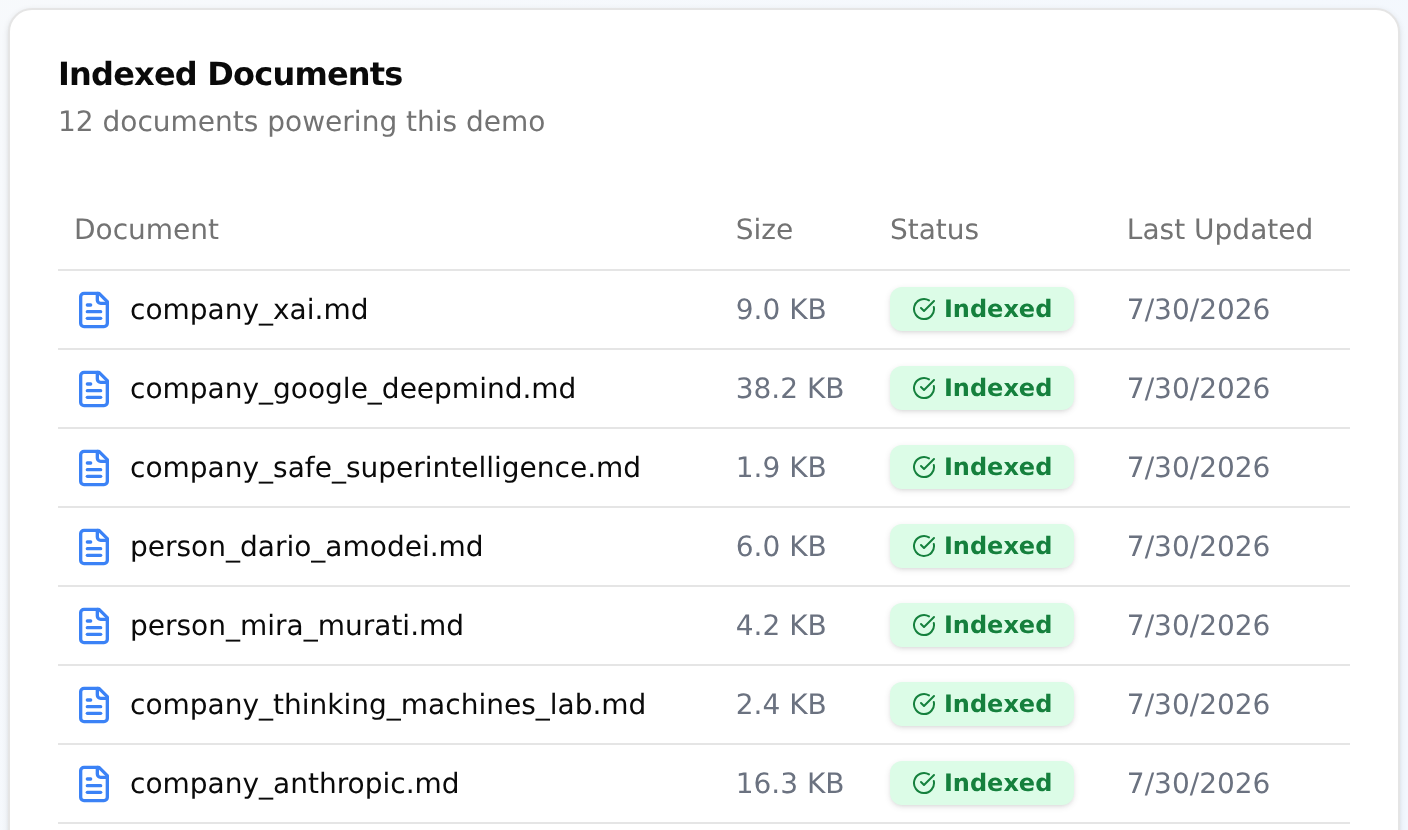
1Upload
Send your knowledge base.
Clarionn reads them, pulls out the facts and adds them to the graph.
# export CLARIONN_API_KEY=cln_sk_...
from clarionn import Clarionn

cl = Clarionn(workspace_id="ws_7c31a0")

files = ["company_openai.md",
         "person_mira_murati.md"]
for path in files:
    report = cl.files.upload(path)
    cl.files.wait(report.id)
2Ask
Ask a question that spans multiple files.
This answer joins three companies and five founders from different documents.
answer = cl.query(
    "Who founded Anthropic, Safe "
    "Superintelligence and Thinking "
    "Machines Lab, and what roles did "
    "each founder hold at OpenAI before?"
)
print(answer.text)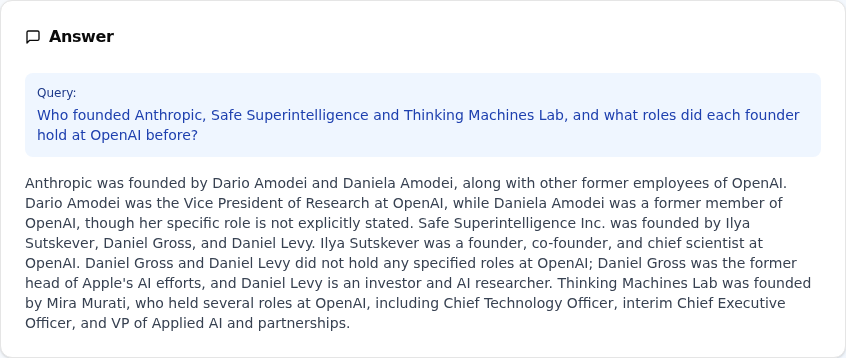
3Check
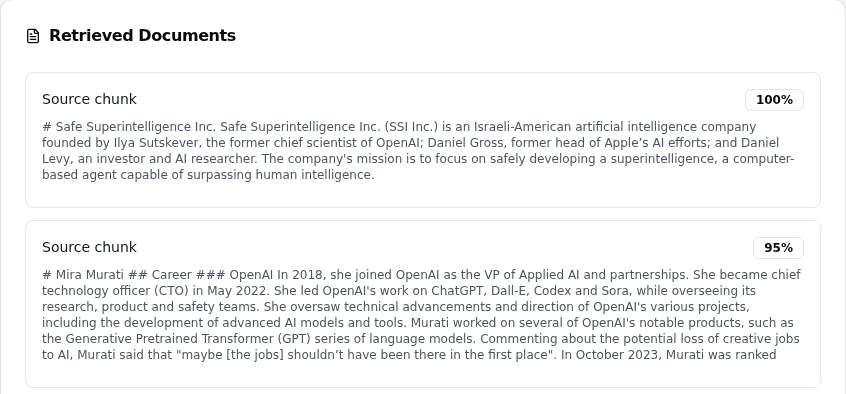
See the evidence behind it.
Each answer carries its source passages. Or send the ranked passages to your own model.
for c in answer.citations:
    print((c.content or "")[:80])

# or just the ranked passages
hits = cl.retrieve(
    "Who founded SSI?", k=3)
for p in hits:
    print(p.score, p.content[:80])
4Explore
Use the graph directly.
Find an entity, walk its connections, or ask how two entities link.
murati = cl.entities.search(
    "Mira Murati").data[0]
openai = cl.entities.search(
    "OpenAI").data[0]

around = cl.entities.connections(
    murati.id, hops=2)
links = cl.relationships.paths(
    murati.id, openai.id)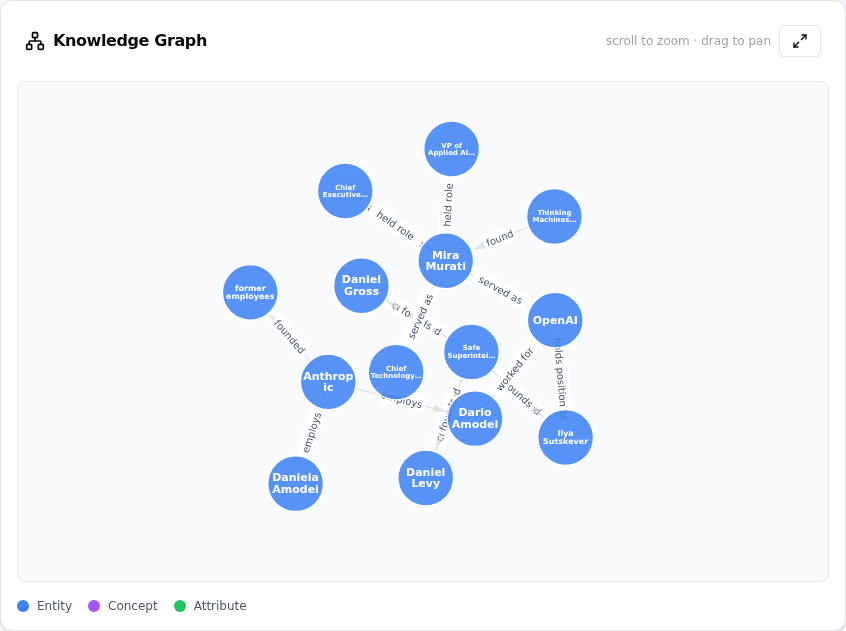
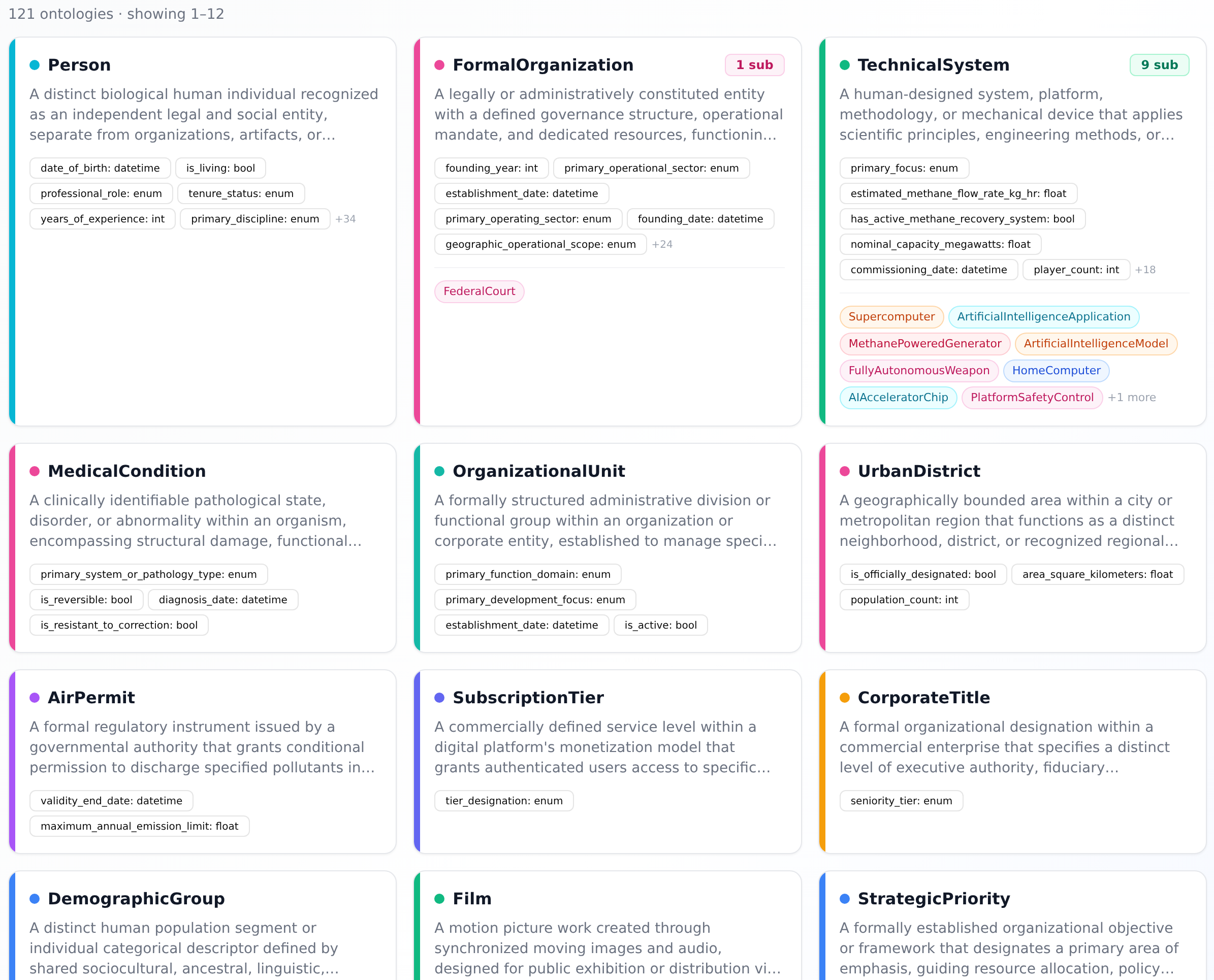
5Inspect
A data model you never have to design.
Clarionn works out the kinds of things your documents describe, and it updates them as new files arrive.
tree = cl.ontologies.list()

for cls in tree.walk():
    print(cls.class_type, cls.name)


Works with the tools you already use.
Python SDK
Available on request. Sync and async clients.
from clarionn import AsyncClarionn

answer = await AsyncClarionn().query(q)
LangChain and LlamaIndex
Drop-in retrievers for both frameworks.
from clarionn.integrations.langchain \
    import ClarionnRetriever

docs = ClarionnRetriever(k=8).invoke(q)
MCP server
Give your agents the graph as a tool.
# point your agent runtime at:
python -m clarionn.mcpnetworkx export
Take the graph out and analyse it yourself.
g = cl.graph.fetch(limit=500).to_networkx()
nx.degree_centrality(g)